EBAs · AU
Multi-EBA Payroll for Contractors Working Across Sites
Last updated 12 September 2026
How Australian contractors can manage EBA coverage, site rates, allowances, overtime and super when employees move between construction sites.
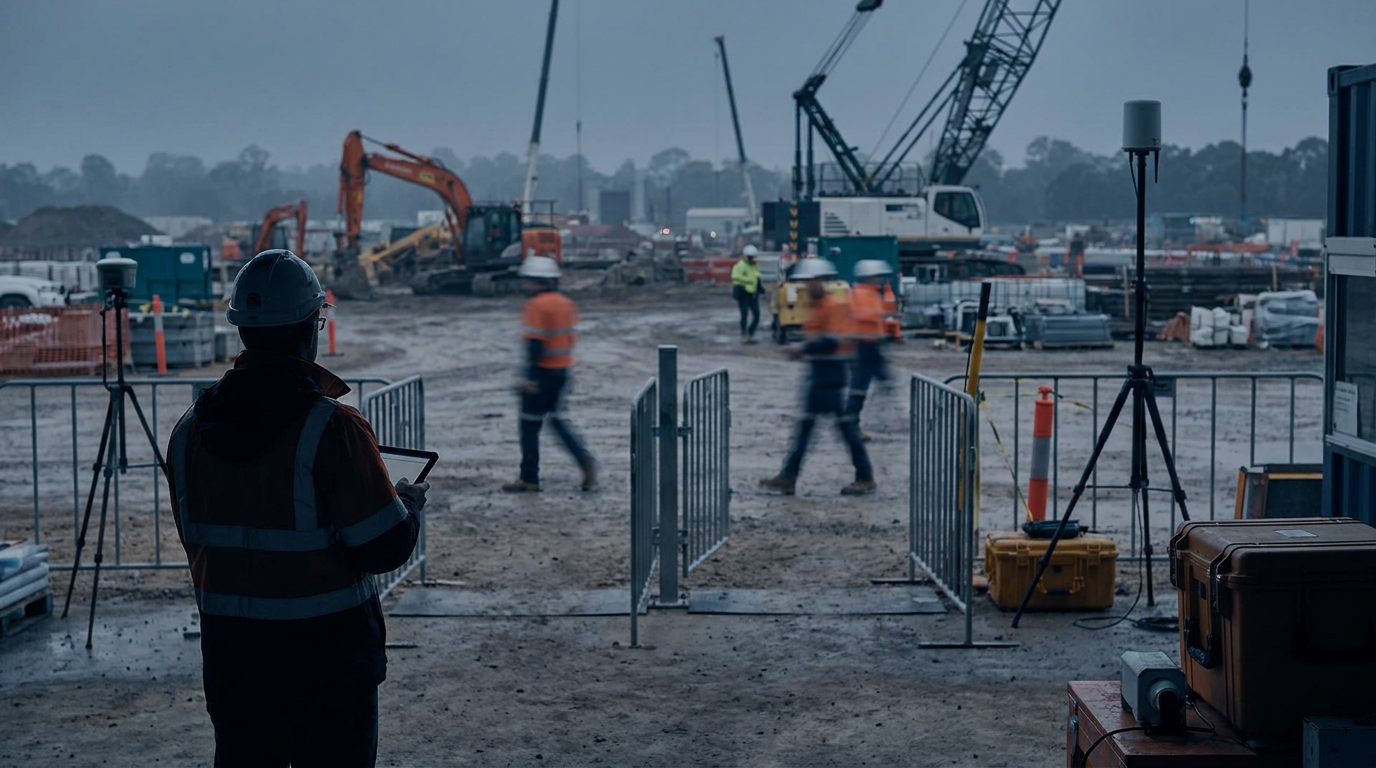
Multi-EBA payroll works by deciding which agreement applies to each employee, site, classification and shift, then paying the matching rates and clauses from the correct effective date. A site change alone does not automatically change the employee’s EBA.
Start with coverage, not the pay rate
When a worker moves from one project to another, it is tempting to copy the new site rate into payroll and get on with the week. That is where trouble starts.
First ask which industrial instrument legally applies. EBA is the common site term, but the Fair Work Act calls it an enterprise agreement.
An agreement may cover a particular employer, group of employees, occupation, project or location. The wording matters. So do its approval date, nominal expiry date and operation date.
A client’s site agreement does not automatically bind every subcontractor on site. Your business and employees must be covered by it, and the agreement must apply under the Fair Work Act. Site access rules, union arrangements or a commercial contract may create separate obligations, but they do not by themselves decide the employee’s industrial instrument.
As a practical rule, do not let supervisors choose an EBA from a drop-down list without controls. Coverage is a legal decision, not a preference.
You can read more about agreement coverage and common construction clauses in the EBA payroll hub.
Can two EBAs apply to the same employee?
Under the Fair Work Act, only one enterprise agreement can generally apply to an employee at a particular time. Two agreements might appear to cover the work, but payroll still needs a documented decision about which one applies.
That decision may depend on:
- the employing entity
- the employee group named in each agreement
- the work and classification being performed
- the project or geographic scope
- operation and termination dates
- transfer of business rules
- Fair Work Commission orders or determinations
Do not simply choose the agreement with the higher hourly rate. A higher base rate may sit beside lower allowances, different overtime rules or a different rostered day off arrangement. The whole entitlement needs to be considered.
If coverage is genuinely unclear, get workplace relations advice before processing the affected period. Keep the written decision with the employee and site records.
Build a site and employee coverage matrix
A coverage matrix gives payroll one place to check the rule before a timesheet is paid. Here is a basic example.
| Payroll question | Site A | Site B | Site C |
|---|---|---|---|
| Employing entity | Contractor Pty Ltd | Contractor Pty Ltd | Civil Works Pty Ltd |
| Applicable instrument | Company enterprise agreement | Project enterprise agreement | Civil construction award or relevant agreement |
| Covered employees | Named trades and labourers | Employees performing defined project work | Employees of the civil entity |
| Rate trigger | Classification and competency | Classification, project and start date | Classification and work performed |
| Site-specific items | Travel and fares | Project allowance, productivity payment | Distant work or living-away arrangements |
| Super rule | Percentage of ordinary time earnings | Percentage plus agreement minimum | Instrument clause and statutory minimum |
| Approval needed for change | Payroll manager | Workplace relations and payroll | Payroll manager |
The actual matrix should include agreement titles, Fair Work Commission approval references, operation dates and clause numbers. It should also identify who approved the coverage decision.
Effective dates matter on every site move
Rates and allowances often change during a project. An agreement might contain annual increases, staged increases or a project allowance that starts only after a specified event.
Store each rate with a start date and, where known, an end date. Never overwrite the old rate. You may need it for a retrospective timesheet, backpay calculation or payroll audit.
For each site movement, record:
- the employee’s last shift at the old site
- the first shift at the new site
- the applicable agreement at each site
- the classification and pay point
- roster, shift and ordinary-hours pattern
- site allowances and eligibility conditions
- the person who authorised the change
If the worker spends one week across two sites, calculate each shift under the applicable rules. Do not average the site rates unless the agreement clearly permits that method.
Keep the pay components separate
A single all-purpose rate can hide mistakes. It becomes difficult to prove whether overtime, allowances, leave and super were calculated correctly.
Keep separate payroll components for:
- ordinary hours
- overtime at each multiplier
- afternoon, night and weekend shifts
- rostered days off and accruals
- site, productivity and disability allowances
- fares, travel time and travel reimbursement
- meal and crib allowances
- inclement weather payments
- leave and public holidays
- redundancy contributions
- superannuation
This is especially important when an allowance is payable for all hours, only ordinary hours or only time physically worked on the project. The agreement clause should drive the calculation.
Check the legal floor as well as the EBA
An enterprise agreement operates alongside the National Employment Standards. It cannot remove minimum NES entitlements.
As at September 2026, the statutory super guarantee rate is 12% of ordinary time earnings, subject to the applicable super rules. An EBA may require a higher contribution, a nominated fund process or a minimum weekly amount. Use the minimum weekly super clause tool when checking how a weekly minimum interacts with part weeks, leave and site transfers.
As at September 2026, the NES maximum for a full-time employee is 38 ordinary hours per week, plus reasonable additional hours. An EBA may arrange those hours across a roster cycle, but payroll must still follow the agreement’s ordinary-hours boundaries.
As at September 2026, full-time employees receive 4 weeks of annual leave under the NES, with 5 weeks for certain shiftworkers. Agreement definitions can affect who qualifies as a shiftworker, so check the clause rather than relying on the employee’s job title.
As at September 2026, Fair Work employee records must generally be retained for 7 years, and a payslip must be issued within 1 working day of payment. Site allocation, hours, rates and allowance records should be detailed enough to explain each amount on that payslip.
Watch for employees who are called contractors
Construction businesses often use the word contractor for both subcontracting companies and individual workers. They are not the same thing.
An employee of a subcontracting company can be covered by that employer’s enterprise agreement. A genuine independent contractor is not put through employee payroll under an EBA. However, calling someone an independent contractor does not settle their legal status.
If the person works under close control, cannot delegate, uses the business’s systems and is paid mainly for their labour, get advice about employee status and sham contracting risk. Do that before deciding which payroll rules apply.
Run a pre-pay comparison
Before finalising each pay run, compare the calculated pay with the employee’s prior week and expected site profile. Large differences deserve a quick look, but small differences can matter too.
Check for:
- workers paid against an inactive agreement version
- missing site transfers
- classification changes without an effective date
- overtime paid using the wrong base
- duplicate site allowances
- minimum weekly super applied twice
- RDO accruals continuing after a roster change
- backpay omitted from leave or super calculations
Think of it like checking the set-out before pouring concrete. Fixing the position early is far easier than pulling apart months of pay runs later.
The Pay Run newsletter
Join the list, payroll for builders, explained fortnightly.
One email. Unsubscribe anytime. We never share your details.
Questions
Does a new construction site automatically mean a new EBA?
No. The applicable agreement depends on its coverage terms, the employer, the employee group, the work and whether the agreement is in operation. A client or head contractor cannot change an employee’s EBA merely by naming a site rate.
What should payroll do if two EBAs seem to cover the same worker?
Pause the coverage change and get a documented workplace relations decision. Only one enterprise agreement can generally apply to an employee at a particular time. Do not choose one solely because it has the higher base rate.
Can one employee be paid under different site rates in the same week?
Yes, if the applicable agreement or site arrangements produce different entitlements for particular shifts. Record the employee’s hours by site, date and shift, then calculate each portion under the relevant rules. Do not average rates unless the agreement permits it.
Does super change when an employee moves sites?
It can. The statutory super guarantee still applies, but an EBA may require a higher percentage, a particular contribution method or a minimum weekly amount. Check ordinary time earnings, the agreement clause and whether the worker spent only part of the week on that site.
How long should we keep EBA payroll and site records?
As at September 2026, Fair Work employee records must generally be kept for 7 years. Keep agreement versions, coverage decisions, classifications, timesheets, site transfers, rate tables, allowance approvals, super calculations and backpay records.
Construction payroll
Stop reading about it. Put it on your crew.
Published pricing, so you never need a call to get a number. We read your award or agreement and build it, and a walkthrough is there whenever you want one. We reply within one business day.
15 minutes, your EBA, no sales script.
No lock-in · Published pricing · We reply within one business day